

Staying Safe Outdoors in Winter
Mike Townend, MB, ChB (Hons), Dip Trav Med, FFTM RCPS (Glasg),
Hon Fellow BGTHA, Hon Clinical Senior Lecturer, University of Glasgow
Published on 01/10/2026
Abstract
On a fine winter’s day, walking in the hills and mountains at home or abroad can be an exhilarating experience but it is not without potential hazards. Careful attention to clothing, equipment and techniques can reduce or eliminate many of these hazards.
In winter, my local Lake District fells are encrusted with jewel-like patterns of rime frost on grasses and dead bracken, with a powdering of snow at higher levels. When the sky is a cloudless blue and the sun is shining low in the winter sky, the clear air provides panoramas of sunlit hills and shaded valleys. Then I am unable to resist the call of the outdoors to feel the sun and the fresh, frosty air on my face, to hear the crunch of my boots on the snow and frozen vegetation, and to feel the uplifting of my spirits as, apparently alone in this silent and still world, I survey the scene stretching before me over the Lake District, the northern Pennines and as far as southern Scotland. Idyllic as this may sound, however, such excursions are not without their potential dangers, as I observed on many occasions during my years as a member of one of the local mountain rescue teams. How then should one prepare for a winter walk on the hills?
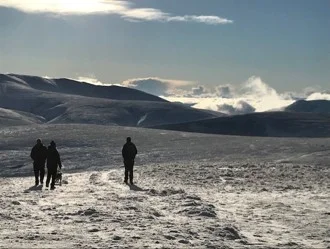
Figure 1: A winter walk in the Lake District
Clothing
The first essential is to keep as warm and dry as possible by wearing suitable clothing. Heat is lost from the body by a combination of conduction, convection and radiation, exacerbated by wetness and wind, and clothing should attempt to reduce all these ways of losing heat. Multiple layers of clothing are more effective than fewer thick or heavy layers, as more air, a good insulator, is trapped between the layers, and as heat builds up on exertion, layers can be shed.
Depending on the ambient temperature and the presence or absence of rain or falling snow, I wear, in order, though not necessarily all at once:
On the upper half of the body:
- a thermal top with long sleeves
- a wool or brushed cotton shirt
- a fleece jacket
- a lightweight down-filled jacket
- a waterproof and breathable outer jacket for additional warmth
- the down jacket should have a hood, as should the waterproof jacket
On the lower half I wear
- thermal “long johns”
- trekking trousers or track suit bottoms
- and carry waterproof and breathable over-trousers
Warm headgear is important in winter, such as a woollen or fleece balaclava that can be pulled down over the face and ears, with an aperture for breathing and vision, or a hat with flaps that can be pulled down over the ears.
Specially designed layered clothing systems are available from several manufacturers for extreme conditions or for those with more money to spend. Often these are made from fabrics designed to wick moisture away from the skin when sweating occurs, but I have always found my less sophisticated clothing entirely satisfactory when walking on my local fells or even when ice climbing in Scotland in the winter, as well as further afield.
Footwear
It is essential to have well-fitting boots that are neither too large, allowing friction to cause blisters or movement of the foot within the boot on descents causing damage to the toes, nor too small, restricting circulation and predisposing to cold injury. They should be fitted during purchase, wearing the type of socks with which they will usually be worn. My preference is for woollen socks with a loop-stitch interior for good insulation. Boots can be classified by their stiffness and intended use, namely B0 (fully flexible walking boots), B1 (semi-stiff for walking and basic mountaineering), B2 (fully stiff for mountaineering and ice climbing) and B3 (fully stiff for technical ice climbing and high-altitude use). Most weekend hill walkers will probably possess B0 boots, which can be safely worn for many winter excursions, but they should be waterproof, preferably containing a breathable membrane such as Gore-Tex, as cold wet feet predispose to cold injury as well as being extremely uncomfortable.
The presence of on paths and slopes can be a hazard on winter walks, but can be coped with by the use of crampons or micro spikes. There are two types of device which consist of points or spikes attached to the boot and improve traction as well as make walking on hard frozen ground or compacted snow easier, particularly on slopes. Crampons are not compatible with fully flexible boots and most weekend walkers will not need to purchase them, though micro spikes can be used with these boots and are a useful and relatively cheap addition to winter equipment. The main differences between spikes and crampons are in their flexibility and the pattern and size of their points.
Crampons intended for climbing usually have twelve points, six on the sole, four on the heel and two pointing forwards for kicking into steep ice when climbing. They are classified as C1 (fairly flexible, and can be used for walking as well as climbing, compatible with all boots except B0), C2 (more rigid, for both walking and climbing, compatible with B2 and B3 boots) and C3 (rigid, compatible with B3 boots). Spikes usually have twelve smaller points, all of which point downwards and are not suitable for serious ice climbing.
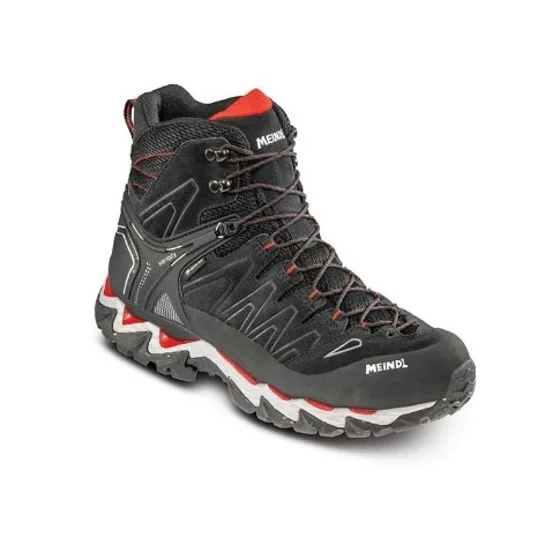
Figure 2: A typical B0 flexible walking boot
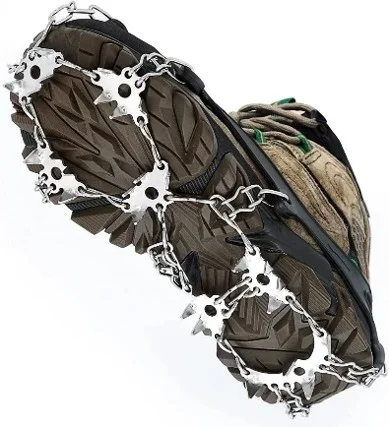
Figure 3: A boot fitted with micro spikes
Waterproof snow gaiters are designed cover the lower part of the leg and the upper part of the boot to prevent melting snow from penetrating into the boot; they are also useful in very wet conditions. If used in conjunction with waterproof over-trousers, which should fit over the gaiters, water or melting snow won’t be funnelled inside the gaiters. When walking with crampons or spikes it is advisable to use a slightly more broad-based gait than usual to avoid the points on one boot from snagging on the trousers or gaiter on the opposite leg, which can result in a serious fall.
Other equipment
A rucksack with a waterproof rain cover is needed to carry spare warm and dry clothing and waterproofs as well as emergency food and drink in case of adverse conditions or injury unexpectedly prolonging the stay outdoors, and for similar reasons a survival bag and a head torch should be carried. A fully charged mobile phone is important for summoning help in the event of any emergency for oneself or others. It is wise to carry a portable power bank in case of battery failure. Many high places will have a good signal, though some valleys and other places may not. The phone should not be relied upon for navigation, however, and it is vital to carry a map and compass in order to navigate one’s way out of trouble and to know how to use them. Even on my familiar local fells, I always have a map and compass in my rucksack. In conditions of poor visibility navigation may not simply be a matter of taking a compass bearing. Dead reckoning is also necessary to know as exactly as possible how far one has travelled in the direction of the bearing. This can be learned by marking out, for example, a hundred metres on level ground and on a slope and counting the number of paces in one’s normal gait when walking on the level, uphill and downhill, carrying out each operation several times. Knowing one’s number of normal paces per hundred metres will then enable a calculation of how far one has travelled when navigating.
Trekking poles help to maintain stability in slippery conditions or steep slopes and also help to reduce the shock loading on the lower limb joints. They should be adjusted in length so that when standing on level ground holding the handles the elbows are at a right angle, though they may be lengthened when going downhill to avoid stooping. The left pole should be advanced at the same time as the right foot and the right pole at the same time as the left foot. In descent the poles should be placed ahead of the stride to exert a slight braking effect, both to prevent slipping and to reduce the shock-loading on the knees.
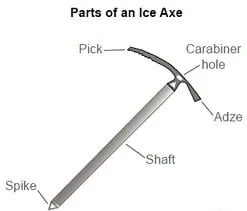
An ice axe should be carried, securely attached to the rucksack when not in use. In ascent it is held by the “T” formed by the adze and the pick, plunging the shaft into the snow to assist ascent, and in descent it can be used similarly to aid stability. In the event of a fall or a slide down steep snow its use is vital in arresting the fall, but it is essential to have proper training and practice in its use in this way. Although very short-shafted axes are used for technical ice climbing, a longer-handled axe should be used for winter walking and general mountaineering. In the event of crampons or spikes having been lost or left at home the adze of the axe can be used to cut steps in steep snow or ice into which the feet can be more securely placed.
Avalanche risk
Figure 4: An ice axe suitable for winter walking
Avalanches are not confined to high mountain ranges such as the Alps or the Himalaya. They can and do occur on British mountains. Most avalanches occur on slopes at an angle of 30 to 45 degrees, though slopes as shallow as 25 degrees have been known to avalanche. When snow settles on a slope it is able to consolidate by a process of repeatedly thawing and re-freezing, causing the points on the snows crystals to join together. Snow which has not consolidated in this way, either wet snow or powder snow, is not securely attached to the slope and is able to slide, forming a wet snow or a powder snow avalanche. Wind-blown snow may settle on an underlying layer, its crystals being abraded and packed together by the force of the wind, forming what is known as slab or windslab. A fracture of this layer, for example by a line of footsteps or ski tracks, can propel a large portion of slab sliding down the underlying area forming a slab avalanche. If there is a substantial amount of snow on the ground it is, therefore, necessary to know what the weather has been doing recently, what the snow conditions are like currently, and what the forecast is for the immediate future. The Mountain Weather Information Service (https://www.mwis.org.uk/) provides weather forecasts for all of Britain’s major upland areas and should be consulted before setting out. Before committing oneself to a snow slope it is also possible to gain information about local snow conditions by digging a snow pit to reveal the layers that have accumulated. If there is a significant difference in density between layers there is likely to be an increased risk of avalanche. Once on the slope, if there appears to be a significant accumulation of windslab with an underlying softer layer it is wise not to make a traverse across the slope for fear of triggering a slab avalanche.
I hope that this article will not deter anyone from going out into the mountains and hills in the winter. With a few basic precautions we can all experience the joy of setting out on a crisp, bright winter day into the brilliant world of whiteness and sheer beauty of our mountain environment. I can end no better that with a quotation from Edward Whymper, the first to climb the Matterhorn in 1865:
“Climb if you will, but remember that courage and strength are nought without prudence, and that a momentary negligence may destroy the happiness of a lifetime. Do nothing in haste; look well to each step; and from the beginning think what may be the end.”